Posts Tagged Manchester Metropolitan University

Human 2.0: Technologies of Enhancement

Human 2.0: Technologies of Enhancement

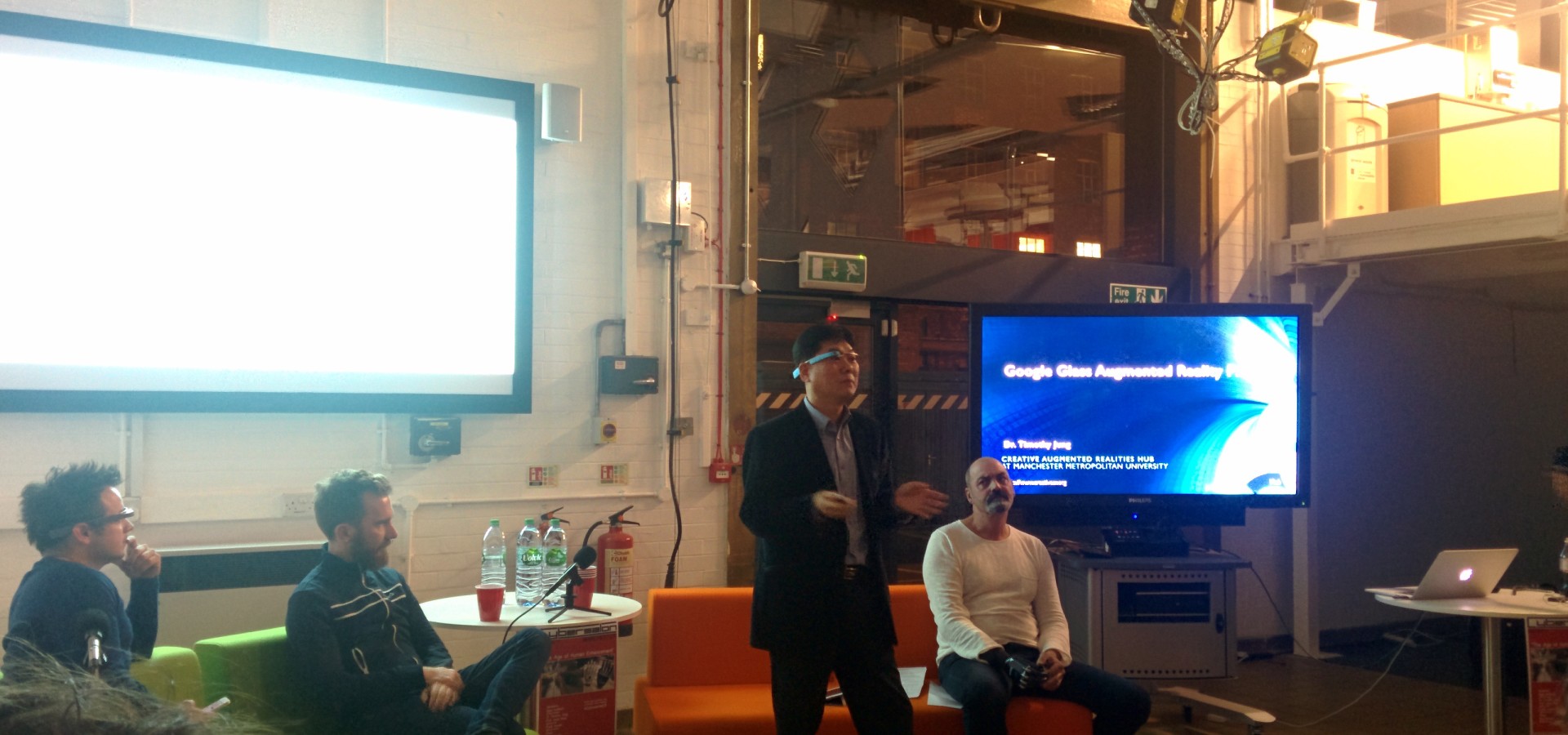
Together with Nigel Ackland, Andy Miah, Frank Swain & Eva Pascoe, Timothy Jung was asked to talk about our projects at Manchester Science Festival on 29th of October. We had inspiring talks by Nigel about being among the first people ever to be fitted with the world’s most advanced prosthetic hand or Andy, Professor at Salford University, with challenging but interesting theories about human augmentation, the ethics involved and future developments. Interestingly three out of five panelists wore Google Glass; not a typical thing to experience in Manchester. It is definitely interesting to see where the future will go.

Our Paper on AR won Runner-up for Best Research Paper Award

Our Paper on AR won Runner-up for Best Research Paper Award

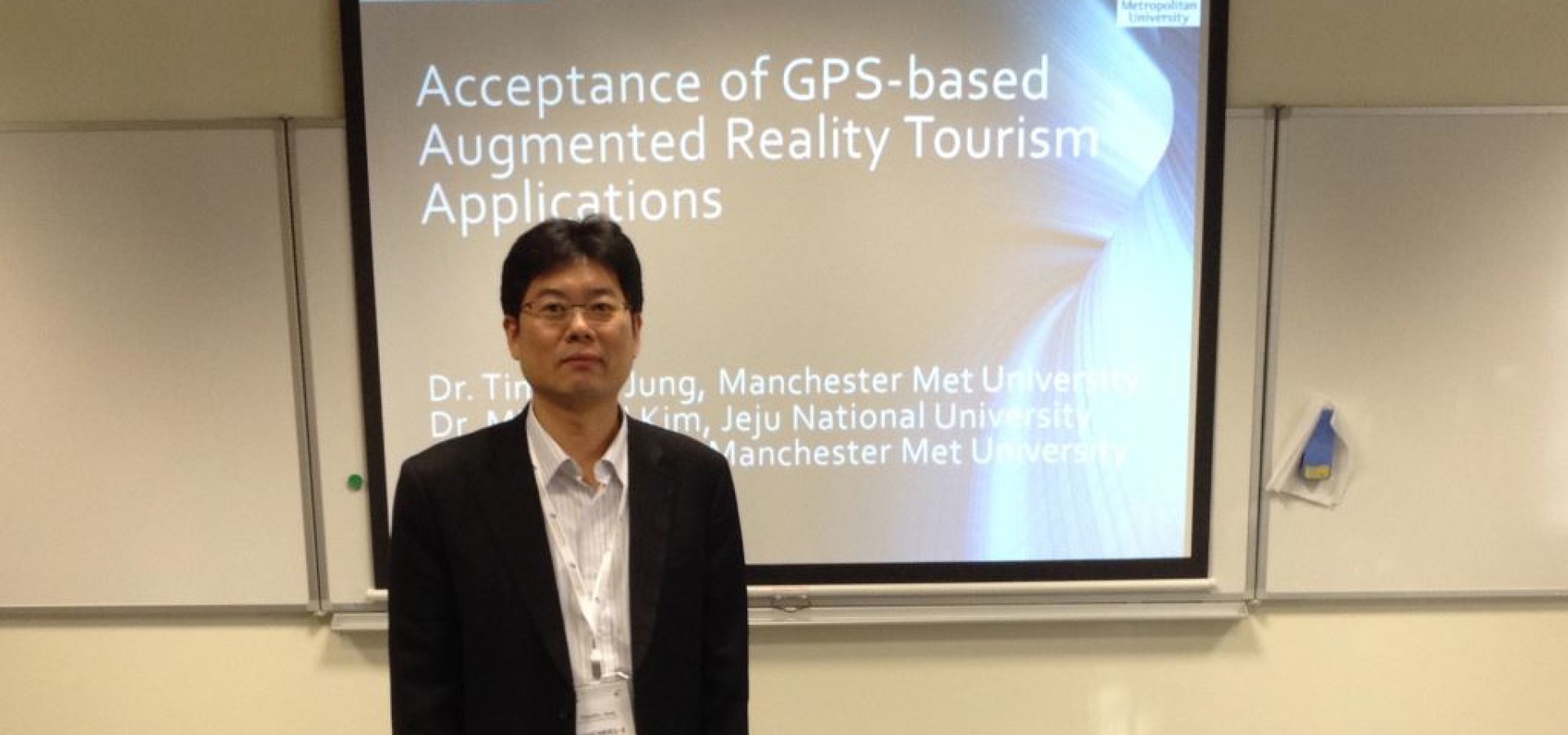
Our paper titled “Acceptance of GPS-based Augmented Reality Tourism Applications” co-authored by Dr Timothy Jung, Dr. M Claudia Leue from the CARH in the Department of Food and Tourism Management, Hollings Faculty, Manchester Metropolitan University and Prof. Mincheol Kim from Department of Management Information System, Jeju National University, Korea, has been selected as runner-up for the Institute of Hospitality’s “Best Research Paper Award” at the EuroCHRIE Conference, held from 6th to 10th October 2014 in Dubai, UAE.

Read more

We are advertising a Studentship for Augmented Reality (AR) Sensory Marketing in Tourism now Open for Application

We are advertising a Studentship for Augmented Reality (AR) Sensory Marketing in Tourism now Open for Application

Augmented Reality (AR) sensory marketing in tourism


Project summary

The Creative Augmented Realities Hub (CARH) at Manchester Metropolitan University has a research focus on new and innovative ways to implement Augmented Reality (AR) in the tourism and creative industries. AR refers to an enhanced version of reality created by the use of technology to overlay digital information on an image of something being viewed through a device (Merriam-Webster, 2013). Due to its nature of mixed reality, AR shows high potential benefits in various industries especially in the context of tourism that lives from the exploration of its immediate surrounding (Olsson et al., 2011) and AR is regarded to create significant economic as well as socio-cultural benefits for businesses and stakeholders in the tourism industry. However, research in AR tourism is still limited and there are no previous attempts to investigate the effect of AR sensory marketing in the tourism context. Traditionally, marketing practice has focused on engaging one of five primary senses by targeting sight as the main source of stimulation. The remaining four (hearing, touch, taste and smell) were left to specific niche situations such as radio or taster sessions for food, but are rarely incorporated into widespread marketing initiatives or plans. Continued interest from researchers, and increasing interest from practitioners means that the utilisation and engagement of all five primary senses plays an important role in future marketing strategies especially considering the emergence of technological advances which can cater to multiple senses in ways previously not possible (Agapito et al., 2012). Hulten (2011) explored that multi-sensory marketing supports the value generation process. Value is assumed to emerge when organisations provide their customers with a sensory experience.

Project aims and objectives

To date, the potential of AR as a tool for the tourism industry has only been investigated from a traditional marketing point of view. However, due to the emergence of technology and capabilities as well as the impact on consumers value generation, sensory marketing becomes more important in the future (Agapito et al., 2012; Hulten, 2011). Therefore, this project aims to investigate AR multi-sensory within the tourism context.

Key Themes

Key themes that might frame the successful applicant’s research include:

  • Augmented Reality (AR) marketing
  • Sensory marketing
  • Emotional marketing
  • Wearable computing
  • Destination marketing
  • Cultural heritage marketing

The successful applicant will have freedom to develop their study according to their interests and as advised by the supervisory team. However, the study will be conducted adopting a mixed method approach (both qualitative and quantitative methods).

Specific requirements of the project

In addition to the requirement to complete the programme within three years, the successful candidate will:

  • present their work at UK or international conferences
  • publish co-authored papers with their supervisors in peer-reviewed journals
  • enrich the student experience of undergraduate students in the Department of Food and Tourism Management at the Manchester Metropolitan University through tutoring and/or lecturing
  • participate fully in the postgraduate research degrees community at the Hollings Faculty
  • maintain frequent and regular contact with the supervisory team.

Student Eligibility

The successful candidate will have a Master’s degree in a related subject area and, for students with English as second language, IELTS 6.5 or above (with a minimum of 6.0 in each element).

These are 2 tuition fee bursaries only.

Supervisory team

These are 2 tuition fee bursaries only. The studentship is supervised by Dr Timothy Jung (Director of Studies) and Dr. Claudia Leue. The successful applicant will enrol initially on the Masters of Philosophy (MPhil) programme and progress, subject to successful transfer viva, at the end of year one to the Doctor of Philosophy (PhD) programme for the remaining two years of study.

For further details about the studentship, please email Dr Timothy Jung t.jung@mmu.ac.uk


See the following webpage for additional informationand application instructions: http://www2.mmu.ac.uk/research/studentships/apparel-fashion-food-and-tourism-management/

@Google Glass project @ManchesterArtGallery

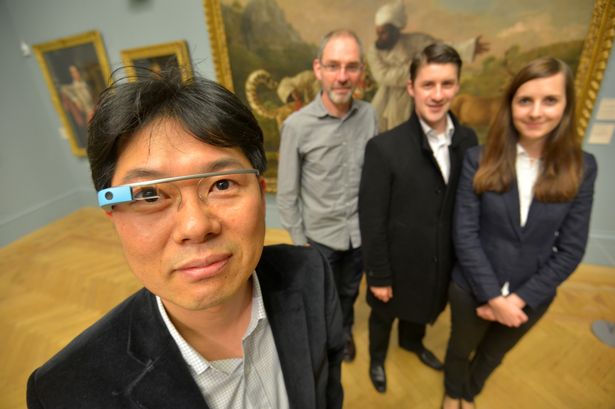
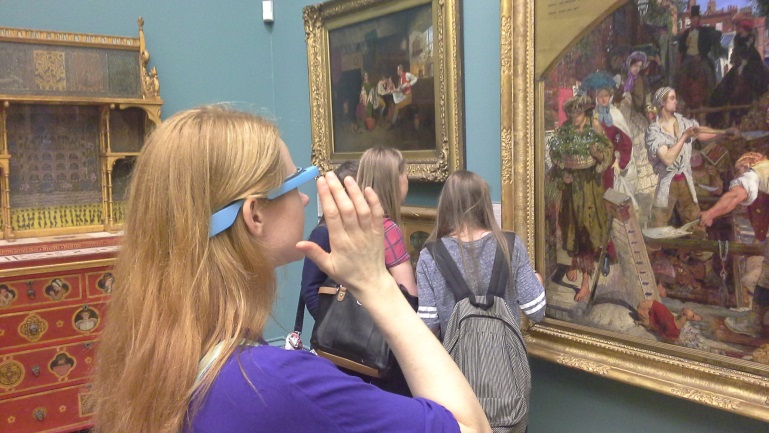
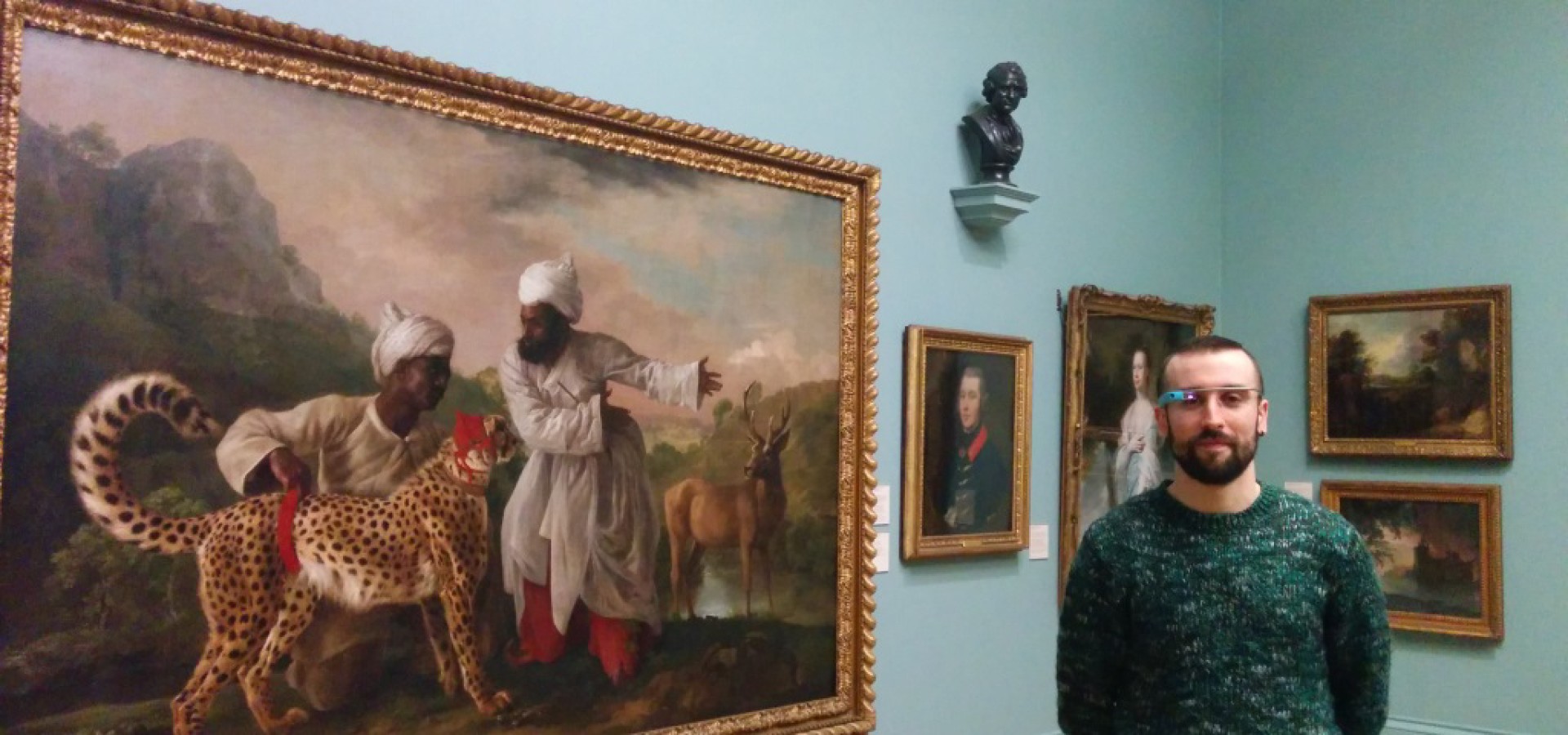
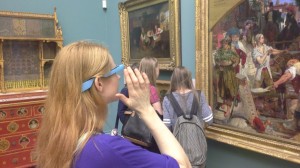
In January 2014, the Creative Augmented Realities Hub at Manchester Metropolitan University (MMU) started the first Google Glass project in cooperation with Manchester Art Gallery and 33 Labs from California. Being among the first in the UK, the project was aiding Manchester’s Digital City strategy of becoming a leading city for digital technologies. More and more people use mobile devices on a daily basis and wearable gadgets are at the forefront in 2014, expected to become the next big thing on the technology stage. Visitors were able to explore the art gallery in a completely different light, receiving augmented information to create a unique experience of cultural heritage. This project aided Manchester in its aim to become a leading Smart City.
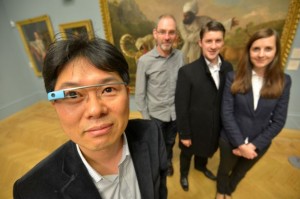
MEN_creativeAR

Source: Manchester Evening News

From the initial discussion to start the project back in September, after a stakeholder meeting with Manchester Art Gallery, Marketing Manchester, MMU and 33 Labs in January, it was decided to pursue the project and be amongst the first ones in Europe to test google Glass in the Art Gallery environment.

The first step of the project included the testing of a very simple prototype application based on one painting “Cheetah and Stag” in April 2014. 29 participants tested the application on Google Glass and participated in a short interview to identify user requirements for the prototype development.
CreativeAR2

Basic feedback was:

–          Social networking

–          Connection between painting

–          Navigation and maps

Based on the feedback from the first test, the prototype was developed and tested in June 2014 with 22 participants.

Overall, after two tests at Manchester Art Gallery, with a total of 51 visitors, outcomes include:

–          More convenient hand free experience

–          Personalised experience

–          Enhanced interaction

–          Better understanding of connections between paintings

–          Increased dwelling time

–          Sharing functions

–          Issues with heating up of device

–          Problems with loading times and videos

–          Battery life

Feedback was generally positive and participants were excited by the opportunities of this new and innovative technology. Time will tell how Google Glass and other head mounted displays will be accepted in the future; if museums and art galleries will offer devices or whether visitors have to own their own glasses and download the application from an app store.

During the course of the project we have experienced some interest in our ideas and it was great to be covered by newspapers such as The Independent and Manchester Evening News as well as numerous online blogs.

http://www.independent.co.uk/life-style/gadgets-and-tech/news/how-google-glass-could-change-the-way-we-view-art-9468326.html

http://www.manchestereveningnews.co.uk/news/greater-manchester-news/manchester-art-gallery-google-glass-7192568

http://www.mancunianmatters.co.uk/content/170769818-lets-get-digital-manchester-central-library-celebrates-turning-80-gadget-fest

http://www.contradodigital.com/2014/07/20/having-a-play-with-oculus-rift-and-google-glass-at-get-digital-manchester/#.U_SujmOrGrJ

Google Glass Project Summary

Google Glass Project Summary


In January 2014, the Creative Augmented Realities Hub at Manchester Metropolitan University started the first Google Glass project in cooperation with Manchester Art Gallery and 33 Labs from California. Being among the first in the UK, the project was aiding Manchester’s Digital City strategy of becoming a leading city for digital technologies. More and more people use mobile devices on a daily basis and wearable gadgets are at the forefront in 2014, expected to become the next big thing on the technology stage. Visitors were able to explore the art gallery in a completely different light, receiving augmented information to create a unique experience of cultural heritage. This project aided Manchester in its aim to become a leading Smart City.

Full summary to download click here: Google Glass Project Summary


Page 2 of 512345