Geraldine Kendall gauges the potential uses of wearable technology for museums and galleries.
A “disruptive event” is, in futurology terms, an innovation or activity that transforms some aspect of people’s lifestyles so much that it will never be the same again. The past decade has seen a few such game-changers but, according to some, wearable technology is fast approaching a disruptive moment that may trump all of those. Many offer the same functionality as existing devices, but in a more convenient, hands-free way. At the other end of the scale, wearables bring with them an entirely new range of possibilities, like intelligent fabric that can help paralysed patients move their limbs.
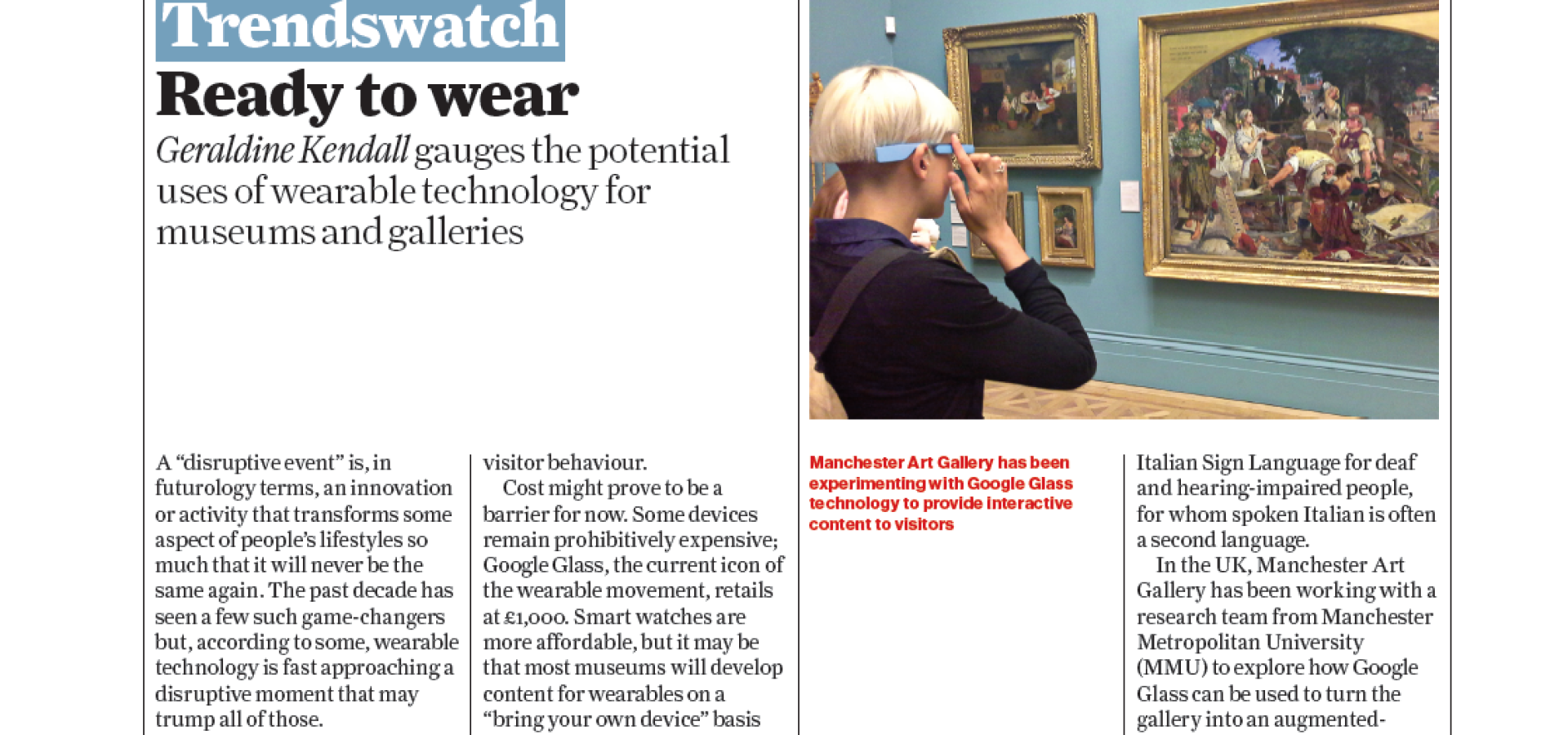
In the UK, Manchester Art Gallery has been working with a research team from Manchester Metropolitan University (MMU) to explore how Google Glass can be used to turn the gallery into an augmented reality environment, where the real-world space is supplemented with interactive, personalised digital content. The team has enabled Google Glass to “recognise” several paintings and provide the wearer with additional text and audio feedback about them. “The possibilities to utilise these technologies to provide highly personalised tours or information sets for individual visitors is bound to increase as visitors demand more refi ned information provision based on their preferences,” says Timothy Jung, the director of the Creative Augmented Realities Hub at MMU, who is leading the Google Glass project.
Full Text (subscription required): http://www.museumsassociation.org/museums-journal/features/01092014-trendswatch