

About CARH

CARH investigates augmented reality for the tourism industry
The Creative Augmented Reality Hub (CARH) is based at Manchester Metropolitan University, UK. It investigates new and innovative ways to implement augmented reality (AR) in the tourism industry. If you are interested in learning about the potential of AR in this sector and other industries, please get in touch to find out about the resources and seminars available to academic and industry partners.
Learn more…
Why tourism and cultural organisations are beginning to use AR
AR is only now maturing into a technology offering real innovation and benefits to users. Until now it has typically been used as a gimmick, primarily as a way for organisations to associate with technological innovation. This hype stage has passed.
Creative and cultural industries, including design, art, heritage, tourism, games and music, are already starting to take advantage of improved mobile devices and mass-market innovations such as Google Glass to implement AR. And, as the technology develops, there is a shift away from simple information overlay towards generating experiences. In tourism, AR has the potential to enhance the visitor experience through the overlay of graphical, auditory and other sense enhancements providing a different view of physical objects and destinations.
The Team
-
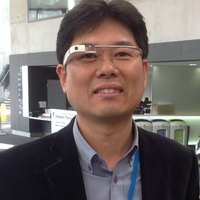 Director of CARH
 -
 Research Associate & Project Manager
 -
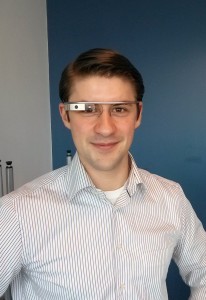 Technology Consultant & Project Manager
 -
 PhD Researcher
 -
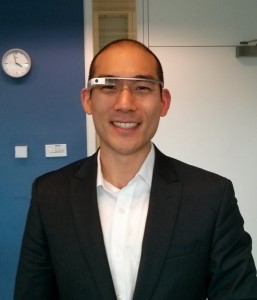 PhD Researcher
 -
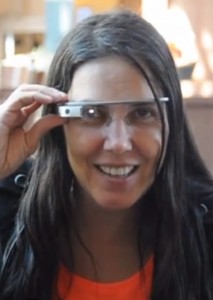 Technology Consultant and App Developer
 -
 Business Consultant
 -
 Consultant
 -
 Consultant
What is augmented reality (AR)?
Augmented Reality (AR) was first usefully defined by Boeing researcher Tom Caudell in 1990 to describe a computerised display overlay that supported aircraft engineers in their job. The term has been used and developed in various industries since, and is today most commonly known as “the interaction of superimposed graphics, audio and other sense enhancements over a real-world environment that’s displayed in real-time” (Digitaltrends, 2014). Since then, AR has been implemented in various settings. For example, television football pundits often mark out gameplay on-screen using digital markers (circling players, etc.). However, hype has increased in the area since mobile applications (‘apps’) started using the technology to enhance the user experience. AR apps are an increasing feature in app stores as developers realise its potential.
AR and the creative economy
The creative economy continues have a significant impact on major economies around the world. In the UK in particular this is the case, where it represents 5.8% of the national GDP compared to 3.3% in the U.S. and 3.1% in Australia (Korea Herald, 2013). The UK’s creative economy exports represent 4.0% of all exports and it employs 8.0% of all UK workers. In 2007, the revenue generated from the creative sector in the UK was measured to exceed GBP 67.5bn. Other countries, such as the U.S., Australia and South Korea are following closely.